Top 10 Reasons Why Print Should be Part of your Marketing
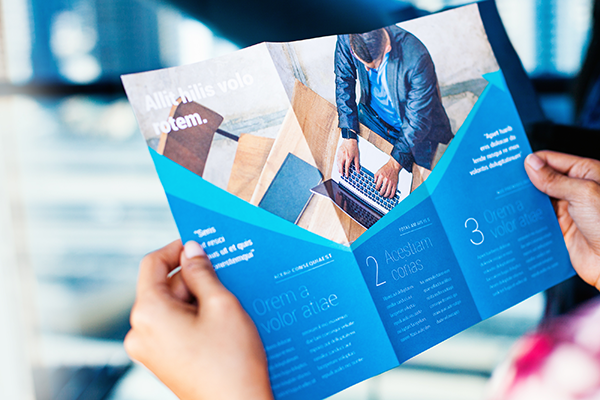
When was the last time a piece of print made you stop and really look? In a world drowning in standard rectangular flyers and flat business cards, the materials that get noticed – and kept – are the ones that break the mould.

At Corsham Print, we’ve invested in specialized equipment that goes beyond traditional printing. Our Veloblade 64 digital die-cutter and premium finishing capabilities transform ordinary print into tactile experiences that command attention and justify premium positioning. But here’s what we’ve noticed: many businesses don’t realize what’s possible.

This post explores how digital die-cutting and premium finishing techniques can elevate your marketing materials from forgettable to unforgettable.

The Problem with Standard Print

Walk into any office and look at the business cards pinned to the noticeboard. Flip through the direct mail sitting on someone’s desk. Visit a retail display. What do you see?

Rectangles. Flat ink on paper. Standard shapes that blend together.

There’s nothing inherently wrong with traditional print – we produce thousands of beautifully printed pieces every month. However, when your goal is to stand out, be remembered, or justify premium pricing, standard print has limitations.

The good news? Technology has evolved. What once required expensive tooling and massive production runs is now accessible for short-run projects.

Digital Die-Cutting:
Custom Shapes Without the Cost

What Is Digital Die-Cutting?

Traditional die-cutting uses steel rule dies – essentially custom-made cutting tools that stamp out shapes. They’re precise and efficient for large runs, but they come with significant barriers:

  • Cost: £200-£500 per die
  • Lead time: 5-10 days to manufacture the die
  • Commitment: You need to produce thousands to justify the investment
  • Storage: Physical dies need to be stored for reorders

Digital die-cutting eliminates all of this. Our Veloblade 64 uses digital files to cut custom shapes with precision – no physical dies required.

What Can Digital Die-Cutting Do?

Our Veloblade 64 can cut materials up to 2mm thick with tolerances of ±0.1mm. That means:

  • Paper and card for business cards, invitations, and marketing materials
  • Corrugated board for packaging and point-of-sale displays
  • Foam board for signage and exhibition materials
  • Magnetic sheets for vehicle graphics and promotional items
  • Vinyl and acetate for window displays and overlays

Maximum sheet size is 600mm x 400mm, and there’s no minimum order quantity. We’ve produced custom-cut runs as small as a single sheet.

Why Digital Die-Cutting Transforms Marketing

Speed to Market: Design today, cut tomorrow. No waiting for dies to be manufactured.

Cost-Effective Short Runs: Custom shapes are now affordable for runs of 1-1000 pieces – perfect for events, product launches, or testing new designs.

Design Freedom: Want to try three different shapes? Each variation is just a new digital file, not a new £300 investment.

Prototyping: Perfect your packaging design before committing to large production runs and expensive steel rule dies.

Real-World Applications

Business Cards That Get Kept: A rectangular business card gets filed (or binned). A custom-shaped card that reflects your brand? That gets kept, shown to colleagues, and remembered.

Packaging That Sells: Custom boxes with unique opening mechanisms, presentation folders with cut-outs that reveal your brand, and protective packaging for delicate products – all possible without massive minimum orders.

Direct Mail That Gets Opened: Interactive elements, unusual shapes, and dimensional pieces dramatically increase open rates compared to standard mailings.

Event Materials: Custom hang tags, distinctive invitations, exhibition materials that create visual impact – all produced on timelines that match your event schedule.

Premium Finishing: The Tactile Difference

Digital die-cutting creates distinctive shapes. Premium finishing creates distinctive experiences.

Foiling: Metallic Impact

Foiling adds metallic gold, silver, copper, or holographic elements to your print. It’s not just visual – it’s dimensional. Foil catches light, creates texture, and signals quality before a single word is read.

We’ve seen foiling transform:

  • Business cards from standard to executive
  • Wedding invitations from nice to luxurious
  • Book covers from self-published to professionally produced
  • Packaging from functional to gift-worthy
  • Certificates from printed to prestigious

Studies show that foil business cards are kept three times longer than standard cards. That’s not just a nice-to-have – that’s extended brand exposure.

Understanding UK Paper Sizes: A Complete Guide for the Print Industry

When it comes to print projects, understanding paper sizes is fundamental to getting your job...

Crops and Bleeds

Today is the big day. After months of blood, toil, sweat and tears; you’re finally ready. This is...
Printing Blocks

What are the different Printing Processes?

Offset Lithograph Digital Printing Large Format Printing It’s a cloudy Sunday morning. After all...
Share This