Understanding UK Paper Sizes: A Complete Guide for the Print Industry

Understanding UK Paper Sizes: A Complete Guide for the Print Industry

When it comes to print projects, understanding paper sizes is fundamental to getting your job right the first time. In the UK, we use the ISO 216 standard (the A-series you’re familiar with), but how does this compare to US sizes, and what do you need to know about envelopes? Let’s break it all down.

The A-Series: The UK Standard

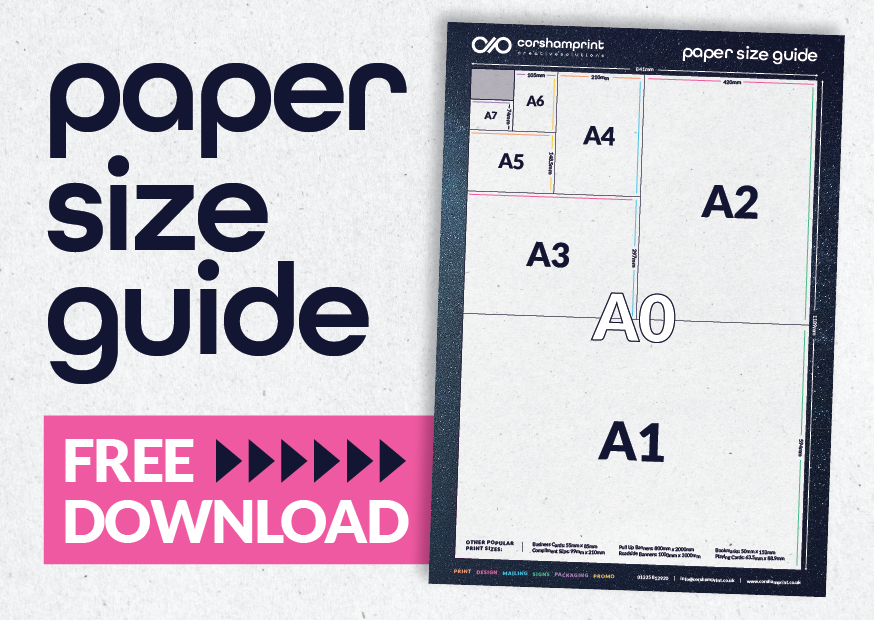
The beauty of the A-series paper sizes lies in their mathematical elegance. Each size maintains the same aspect ratio (1:2), meaning when you fold an A4 sheet in half, you get A5. Fold it again, and you have A6.

Common A-Series Sizes

  • A0: 841 × 1189mm – Perfect for large format posters and technical drawings
  • A1: 594 × 841mm – Ideal for flip charts and architectural plans
  • A2: 420 × 594mm – Popular for posters and display boards
  • A3: 297 × 420mm – Used for tabloid-size documents and small posters
  • A4: 210 × 297mm – The standard office paper size in the UK
  • A5: 148 × 210mm – Common for notepads, flyers, and small brochures
  • A6: 105 × 148mm – Perfect for postcards and small leaflets
  • A7: 74 × 105mm – Typically used for small notepads and business cards

Why the A-Series Matters in Print

For printers, the A-series system is incredibly efficient. Because each size is exactly half of the previous one, we can optimize paper usage and minimize waste. When printing A5 flyers, we can fit two on an A4 sheet. Four A6 postcards fit perfectly on A4. This standardization makes production planning straightforward and cost-effective.

The consistent aspect ratio also means designs scale beautifully across different sizes without distortion – crucial for maintaining brand consistency across various print materials.

UK Envelope Sizes

Envelopes follow a complementary system, with C-series envelopes designed to hold unfolded A-series paper:

C-Series Envelopes (for unfolded documents)

  • C6: 114 × 162mm – Holds A6 paper unfolded (perfect for greeting cards)
  • C5: 162 × 229mm – Holds A5 paper unfolded or A4 folded in half
  • C4: 229 × 324mm – Holds A4 paper unfolded (standard business envelope)
  • DL: 110 × 220mm – The most common business envelope, holds A4 folded in thirds

Why DL Envelopes Dominate

The DL (Dimension Lengthwise) envelope is the workhorse of UK business mail. It’s designed to hold an A4 sheet folded into three equal parts, making it ideal for letters, invoices, and statements. It’s cost-effective to post and fits comfortably through standard letterboxes.

UK vs US Paper Sizes: The Key Differences

Here’s where things get interesting – and potentially confusing if you’re working with international clients.

US Letter vs A4

The most common comparison is between US Letter (8.5 × 11 inches or 216 × 279mm) and A4 (210 × 297mm).

  • A4 is narrower but taller than US Letter
  • A4 has 6% more surface area than US Letter
  • Documents designed for US Letter may have margins cut off when printed on A4

Other US Sizes

  • US Legal: 8.5 × 14 inches (216 × 356mm) – No direct UK equivalent
  • US Tabloid: 11 × 17 inches (279 × 432mm) – Roughly similar to A3 but different proportions
  • US Executive: 7.25 × 10.5 inches (184 × 267mm) – Falls between A4 and A5

The Practical Impact

For UK printers working with international clients, these differences matter significantly:

  1. Design considerations: A brochure designed for US Letter won’t fit perfectly on A4 without adjustment
  2. Binding and finishing: Different proportions affect how documents fold, bind, and finish
  3. Envelope compatibility: US #10 envelopes (the equivalent of our DL) are slightly different in size
  4. Print equipment: Most UK print equipment is optimised for A-series sizes

B-Series: The Middle Ground

There’s also a B-series, which sits between A-sizes and is less commonly used but valuable for specific applications:

  • B5: 176 × 250mm – Popular for books and smaller publications
  • B4: 250 × 353mm – Used for newspapers and oversized documents

B-series sizes are particularly useful when A-sizes are slightly too small or too large for your needs.

Practical Tips for Print Projects

For Designers

  • Always confirm whether your client needs UK or US sizes before starting
  • Build in an appropriate bleed (typically 3mm in the UK) for all sizes
  • Remember that A-series sizes scale proportionally – design once, adapt easily

For Businesses

  • Stick to standard sizes wherever possible to minimize costs
  • A5 flyers are cost-effective because two fit on an A4 sheet
  • DL envelopes offer the best value for business correspondence
  • Consider A6 postcards for direct mail – they’re eye-catching and economical

For International Projects

  • Always specify measurements in both metric and imperial
  • Check envelope compatibility if mailing internationally
  • Consider your audience’s expectations – US clients expect Letter size
  • PDF files should specify page dimensions to avoid confusion

The Environmental Advantage

The mathematical precision of the A-series system isn’t just elegant – it’s environmentally responsible. The ability to cut multiple smaller sizes from larger sheets with minimal waste means less paper in landfill and more efficient use of resources. At Corsham Print, our FSC certification combined with the efficiency of A-series sizes helps us minimise environmental impact while delivering quality print.

Conclusion

Understanding paper sizes might seem like a small detail, but it’s fundamental to successful print projects. The UK’s A-series system offers efficiency, scalability, and environmental benefits that make it the global standard outside North America. Whether you’re printing business cards, brochures, or large format posters, knowing your A4 from your US Letter – and your C5 from your DL – ensures your project runs smoothly from design to delivery.

Need help choosing the right paper size for your next print project? Get in touch with our team at Corsham Print – we’re here to make sure your print works perfectly, every time.
Case Study: Supporting the Launch of TREE Foundation at Dyrham Park

Case Study: Supporting the Launch of TREE Foundation at Dyrham Park


How Corsham Print Delivered Museum Quality Event Printing for a Historic Charity Launch


Bringing History to Life Through Professional Print Services

When the Trust for Records of Enslavement and Emancipation (TREE Foundation) approached us to support their official launch event at the historic Dyrham Park, we knew this was more than just another print job. This was an opportunity to help tell an important story – one that would preserve history, educate communities, and create lasting impact.


The Challenge: High-Stakes Heritage Event Printing

TREE Foundation needed a comprehensive suite of printed materials for their launch event, materials that would:

    • Reflect the gravitas and importance of their mission to preserve slavery-era records
    • Create a professional, cohesive brand presence with museum-quality presentation standards
    • Support their educational objectives for schools and community groups
    • Stand up to scrutiny from heritage professionals, National Trust partners, and the public
    • Be delivered on time for a high-profile charity launch event

With original slavery-era documents being displayed publicly for the first time, every detail mattered.


Our Solution: Full-Service Event Print and Design

Working closely with TREE Foundation founder Matt Johnston and his team, we delivered a complete package of materials that brought their vision to life:

Professional Name Badges for Events

Durable, high-quality name badges for guests, speakers, and partners—ensuring smooth event flow and professional networking opportunities.

Pull Up Banners and Exhibition Displays

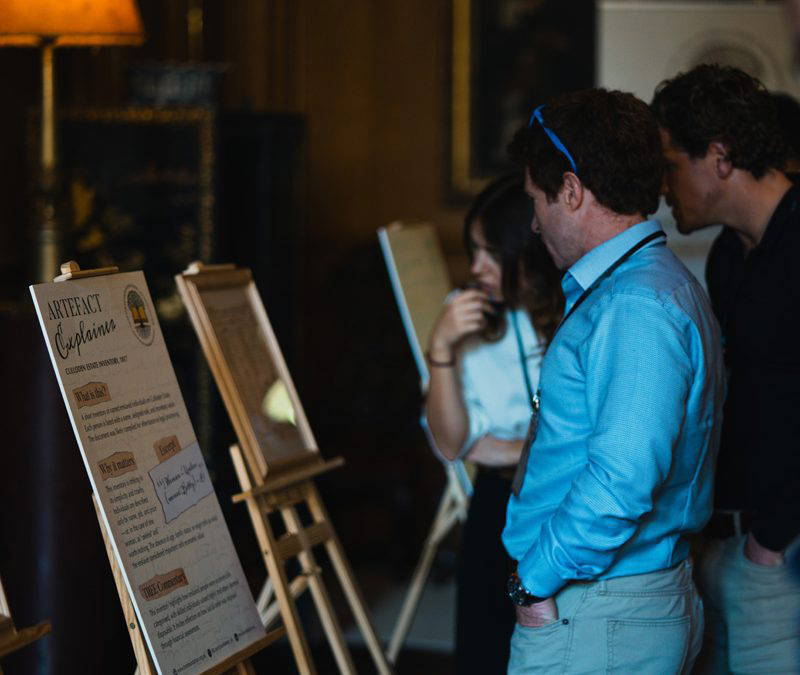
Eye-catching, informative banners that communicated TREE’s mission at a glance: Preservation, Digitisation, Education. These exhibition banners served as visual anchors throughout the venue, reinforcing brand identity and key messages.

Business Cards for Networking

Premium business cards designed for maximum impact, essential tools for building partnerships and expanding TREE’s reach beyond launch day.

Educational Materials and Resource Packs

Thoughtfully designed education packs that made complex historical content accessible and engaging. These materials support TREE’s core mission of bringing slavery-era records into schools and communities and are now being trialled by schools in Bath and regularly downloaded by home educators and museums nationwide.

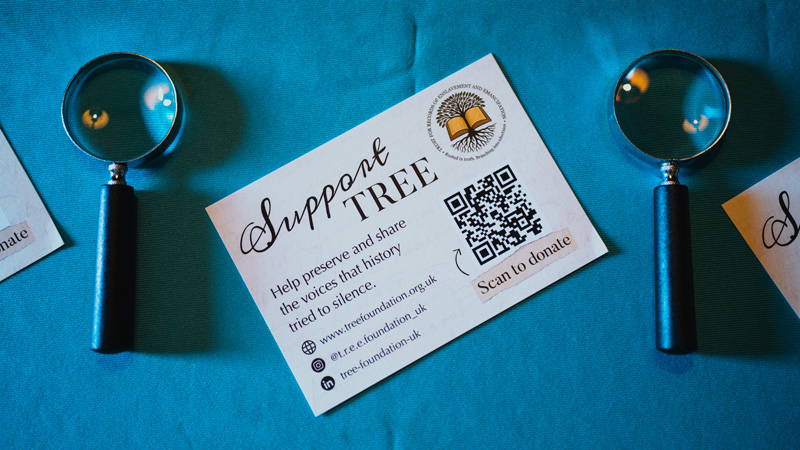
Charity Donation Cards

Professionally printed donation cards that made it easy for supporters to contribute to TREE’s important work – turning event enthusiasm into tangible financial support.

Custom Timeline Panels for Exhibitions

Bespoke timeline panels that provided historical context and helped visitors understand the significance of the documents on display. These exhibition panels received extensive positive feedback from visitors and heritage partners, transforming the space into an immersive educational experience.


The Result: A Successful Charity Launch Event

The launch event at Dyrham Park was a resounding success. TREE Foundation officially became a registered charity (CIO, Charity Number 1215170) on the very day of its launch – a fitting milestone for an organisation dedicated to preserving and sharing vital historical records.

Our Event Printing Services Delivered:

    • Enhanced visitor experience with museum-quality presentation materials
    • Active educational resources are now used by schools, home educators, and museums
    • Effective networking tools that facilitated partnership building
    • Donation generation through professionally printed materials
    • Strong visual brand identity for the new charity
    • Ready-to-display exhibition that TREE is now programming through to 2027


Client Testimonial

Matt Johnston, Founder – TREE Foundation:

“Corsham Print completely understood the tone we wanted for TREE’s launch, keeping everything clean, professional, and historically grounded. Their attention to detail and ability to turn ideas into high-quality printed materials, from banners and exhibition panels to education packs and presentation folders, gave the entire launch a real museum-quality feel.

We had heritage partners, National Trust staff and educators commenting on how well-presented and accessible everything was.”

Matt also shared: “The design and prints you produced made a huge difference to the overall feel of the event, and the panels in particular received a lot of positive feedback from visitors and partners. What you’ve done is help build a support wrap around a nationally important collection, which has made the material far more accessible to the public and given us a ready-to-display exhibition.”


Why Choose Corsham Print for Your Event?

At Corsham Print, we’re proud to support organisations making a real difference in our community and beyond. TREE Foundation’s work, preserving records of enslavement and emancipation, digitising historical documents, and making them accessible to schools and the public, aligns perfectly with our values of sustainability, education, and community impact.

Our Event Printing Capabilities:

    • Comprehensive print solutions from design to finished products, all under one roof
    • Fast turnaround times for time-sensitive events and launches
    • Museum-quality materials that meet heritage sector standards
    • Support for charities and nonprofits using our 45+ years of printing experience
    • Long-term partnership approach, creating materials that serve beyond single events
    • Collaborative design process, working closely with clients to realise their vision

Beyond the Launch: Lasting Impact

The impact of our event printing services for TREE Foundation extends far beyond launch day:

    • Education packs are being trialled by schools in Bath and downloaded by home educators and museums across the UK
    • Exhibition materials are supporting a programming schedule through to 2027
    • Timeline panels and banners have created a ready-to-display exhibition, making a nationally important collection accessible to the public

We’re proud to be partners in building a support wrap around this vital historical collection.


Our Commitment to Heritage and Education Printing

TREE Foundation joins a growing list of heritage, education, and community organisations we’re proud to support – including Bath Preservation Trust, Civic Societies, Jamie’s Farm, and educational institutions across the South West.

Whether you’re launching a charity, hosting an exhibition, or organising a community event, we understand that your printed materials aren’t just products – they’re tools for change, education, and connection.


Ready to Plan Your Event Printing?

If you’re planning an event, launching an initiative, or need comprehensive print solutions that make an impact, we’d love to hear from you.

Contact Corsham Print Today:

    • Call us to discuss your project requirements
    • Visit us on Leafiled Industrial Estate, Corsham, SN13 9SW, we love to show off what we can do.

From concept to delivery, we’re here to help you tell your story – sustainably, professionally, and with the personal service that comes from 45+ years of printing experience.


Corsham Print Ltd is part of an FSC-certified group serving businesses, charities, and public sector organisations across Wiltshire and the South West. We specialise in sustainable printing, design services, exhibition signage, and comprehensive event support.


    • Exhibition and display printing
    • Charity and nonprofit printing services
    • Educational materials and resource packs
    • Event banners and signage
    • Professional business cards
    • Custom timeline and information panels

From Pixels to Paper: The Fascinating Journey of Your Print Job

From Pixels to Paper: The Fascinating Journey of Your Print Job

Ever wondered how your digital designs transform into those eye-catching brochures, magazines, and business cards in your hands? The journey of a print job is a fascinating one, filled with high-tech tools and meticulous human expertise. Let’s delve into the key stages of this transformation:

Stage 1: Prepping for Print (Prepress)

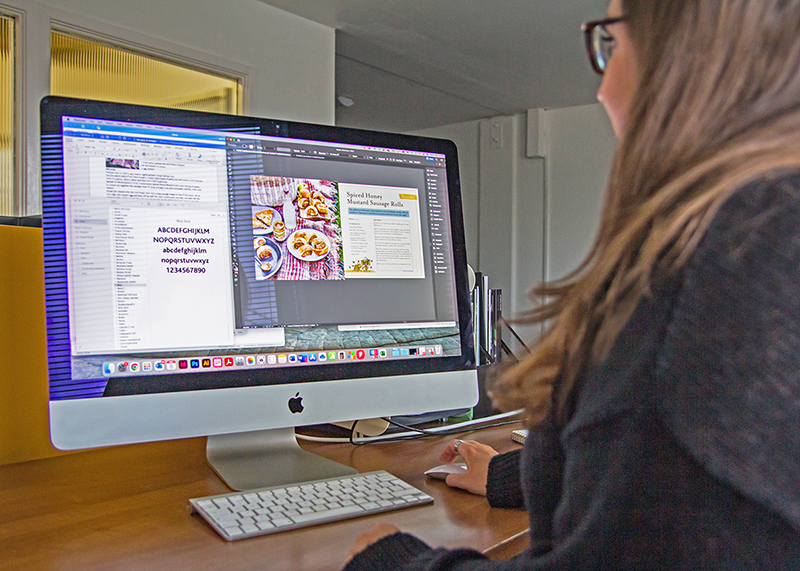
Girl working of a graphic design job
Jordan from our design studio putting the finishing touches to her design.

Design and File Creation: The magic begins with your vision! Graphic designers weave text, images, and branding elements using powerful software like InDesign, Photoshop, or Illustrator.
Proofreading: A keen eye is crucial! Meticulous proofreading ensures your design is flawless, free from typos, grammatical errors, and visual inconsistencies.
File Conversion and Optimisation: Getting ready for the press! Files are converted to compatible formats, fonts are outlined, and high-resolution images are prepped to ensure stunning results.
Color Management: Accuracy is key! Colour profiles guarantee your desired hues translate flawlessly from digital to different paper types.
Platemaking: Depending on the chosen printing method (offset, digital, etc.), printing plates are produced. These hold the ink-transferring areas, ready to bring your design to life.

Stage 2: Putting Ink to Paper (Press)

Offset Printing

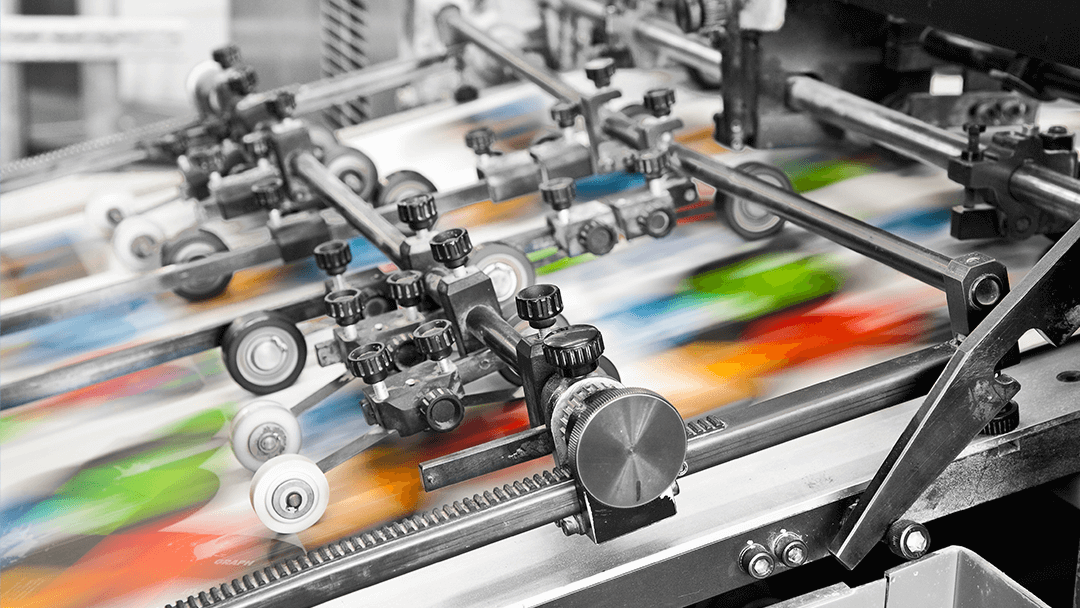
Press Setup and Calibration: Precision matters! The printing press undergoes meticulous calibration using ink volume settings for consistent ink flow, paper feeding, and colour registration.
Printing: The moment of truth! Plates are loaded onto the press, paper sheets are fed through, and vibrant ink dances onto the surface, transforming your digital creation into a tangible reality.
Quality Control: Every detail counts! Trained professionals monitor ink levels, colour accuracy, and paper feeding throughout the process, ensuring the highest quality standards for your print job.

Stage 3: Finishing Touches (Postpress)

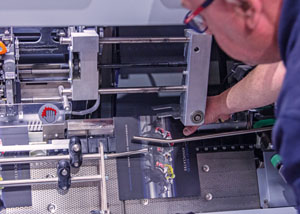
Kev setting up the saddle stitcher to finish a booklet

Folding and Trimming: Taking shape! Printed sheets are folded, trimmed, and collated into their final form. Brochures get their signature folds, while books undergo intricate binding and page assembly.
Binding and Finishing: Adding the finishing touches! Your print job might receive special effects like die-cutting, embossing, lamination, or UV coating for extra visual appeal and durability.
Inspection and Packing: Ready for the world! A final thorough inspection ensures your print job is flawless. Once approved, your creations are carefully packed and prepared for delivery.

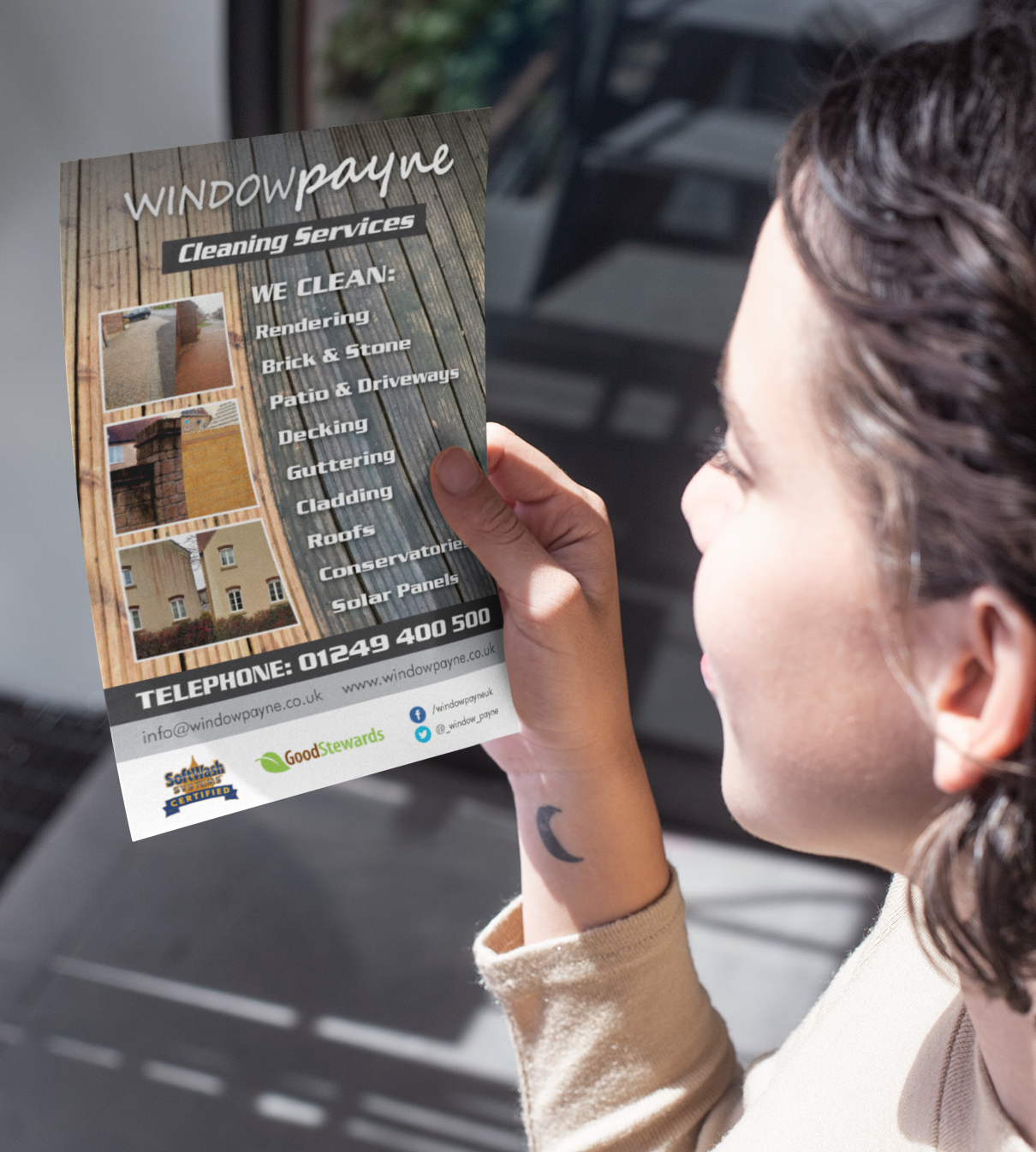
Female looking at Window Payne Flyer

So, the next time you admire a beautifully printed design, remember the fascinating journey it took to get there. From meticulous digital set-up to high-tech printing and expert finishing, the printing process is a testament to human ingenuity and technological prowess. It’s a journey that transforms pixels into paper, ideas into reality, and your vision into a tangible masterpiece to hold and cherish.

The Environmental Impact of Print

The Environmental Impact of Print

A national climate emergency has been declared by the UK Parliament and we all must take responsibility to take action help this situation. At Corsham Print the environmental impact of print is top of our agenda.

Printing as an industry has, for a long time, had a stigma surrounding it when looking at its environmental impacts. However, not many people know but the print and paper industry has been working for decades to protect the environment. 

  • Vegetable oil based inks
  • Low energy production
  • Certification of paper
  • Carbon capture

Despite these initiatives there are still many myths about print and paper that cause major issues within the industry. Misconceptions are further reinforced by financial organisations, utility companies, and many other service providers. This is because they are increasingly encouraging their customers to switch to paperless bills and statements.

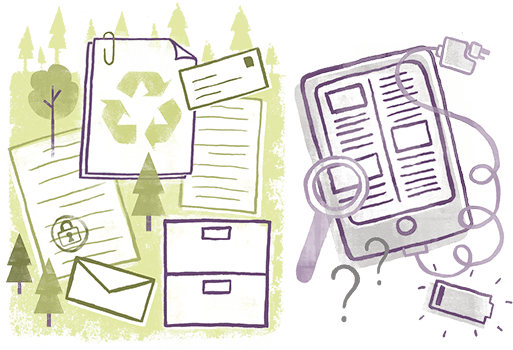
We have put the following information together with the help of ‘Two Sides’. An initiative to promote the sustainability of the graphic communications and dispel common environmental misconceptions. Providing users with verifiable information on the environmental impact of print and why print and paper is an attractive, practical and sustainable communications medium.

Myth: European forests are shrinking

Fact: On average, European forests have been growing by over 1,500 football pitches every day.

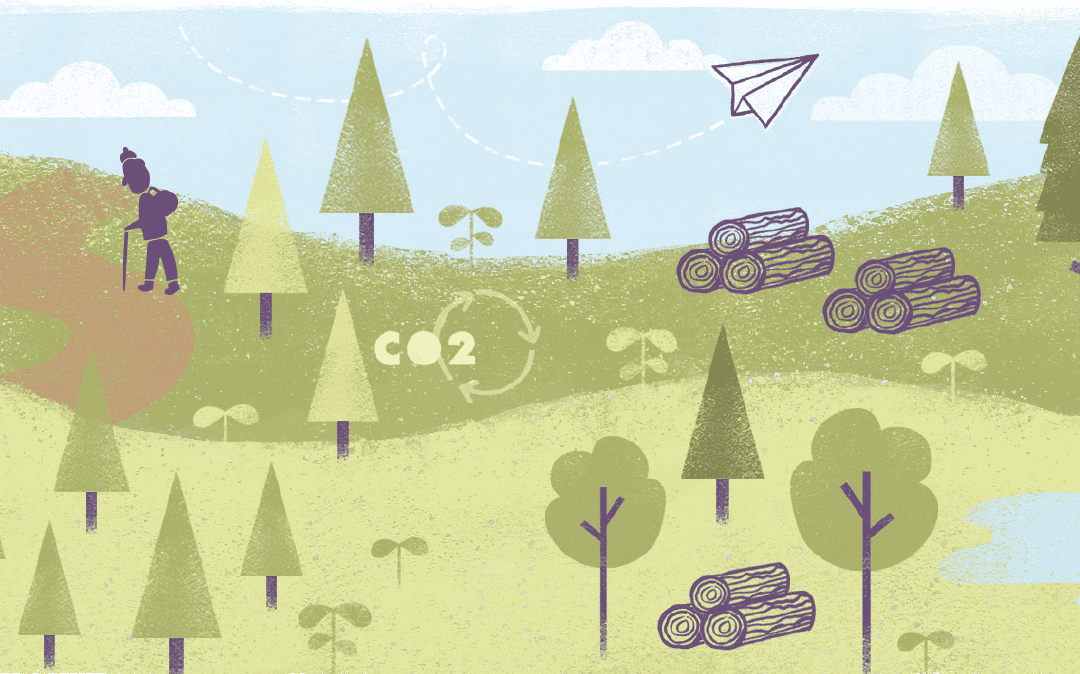
Paper is a uniquely-renewable and sustainable product. The main raw material, trees, are grown and harvested in a carefully controlled and sustainable way – so successfully that European forests, where most of the raw material comes from, have grown by an area the size of Switzerland in just 10 years. This means that between 2005 and 2015, European forests grew by 44,000 square kilometres, which averages 1,500 football pitches per day.

Myth: Planted forests are bad for the environment.

Fact: Well managed planted forests reduce the amount of pressure on natural forests and can provide many other environmental benefits.

Forests are essential for the transition to the green economy. Well managed planted forests are a vital element in the global forestry mix. Natural forest accounts for 93% of world’s forest area with planted forest occupying 7%, or 290 million hectares. In Europe, planet forests are not replacing natural forests. They provide many benefits, such as: providing new recreational facilities, preventing soil degradation and erosion, and providing new habitat shelter for wildlife.

Myth: Paper is bad for the environment.

Fact: Paper is one of the few truly sustainable products.

Paper is based on wood, a natural and renewable material. As young trees grow they absorb CO2 from the atmosphere. Furthermore, as a wood product, paper continues storing carbon throughout its lifetime. The paper industry has several respected certification schemes ensuring the paper you use has come from a sustainable forest source. The two most recognisable certifications are the Forest Stewardship Council® (FSC) and the Programme for the Endorsement of Forest Certification (PEFC).

Myth: Paper production is a major cause of global greenhouse gas emissions.

Fact: Most of the energy used is renewable and carbon intensity is surprisingly low.

The European pulp and paper industry produces original bio-based products using wood, a renewable material. It is also the biggest single industrial user and producer of renewable energy in the EU: 60% of the industry’s total fuels consumption is biomass-based. And the industry has the potential to do even more in the future. It has the experience, technology and supply chain to play a big part in the bio-economy and to do so in a resource efficient manner.

Myth: Electronic communication is more environmentally friendly than paper-based communication.

Fact: Electronic communication also has environmental impacts.

“Go Paperless”, “Go Green” and “Save Trees” are common messages seen these days as many organisations encourage their customers to switch to electronic transactions and communications. But are these appeals based on fact?

Paper is a uniquely renewable and sustainable product. The main raw material, wood, is grown and harvested in a carefully controlled and sustainable way. Furthermore the environmental impacts of our ever-increasing digital world cannot be ignored. The ICT industry accounts for around 2.5-3% of global greenhouse gas emissions and this is predicted to rise to 14% by 2040.

Corsham Print Environmental Initiatives

We run a state-of-the-art LED drying offset press. Drying ink with LED lights rather than the old conventional UV systems has reduced power consumption by between 88-91%.

We are a member of an FSC® Certified Group FSC-C004309 and we only print on FSC-certified paper.

Our retail stationery outlet has introduced a wide range of environmentally friendly products including Woodland Trust papers.

We are part of Premier Paper and The Woodland Trust’s Carbon Capture Program.

Click below to download an interesting read produced by ‘Two Sides’

Some useful links on the environmental impact of print:

What are the different Printing Processes?

What are the different Printing Processes?

  1. Offset Lithograph

  2. Digital Printing

  3. Large Format Printing

It’s a cloudy Sunday morning. After all the dilemmas of preparing artwork, choosing both a paper size and weight you finally have a chance to relax. This has been a long and arduous journey. But finally, you see the light at the end of the tunnel. To your knowledge everything has been decided, your magnum opus is in the capable hands of the printer.

An alert. You have another email. Panic sets in, however on opening it you see that it’s just a summary of your print job. Relief washes over you. The worst is over.

But what is this, the printer has asked you how would you like you job printed, ‘digital, litho, large format, inkjet?’ You’re confused, surely it’s just printed on a printer? What are all these mysterious choices to be made, and should they be feared or have reverence paid to them?

We hope these descriptions will help you understand what the hell they are on about:

Offset Lithography

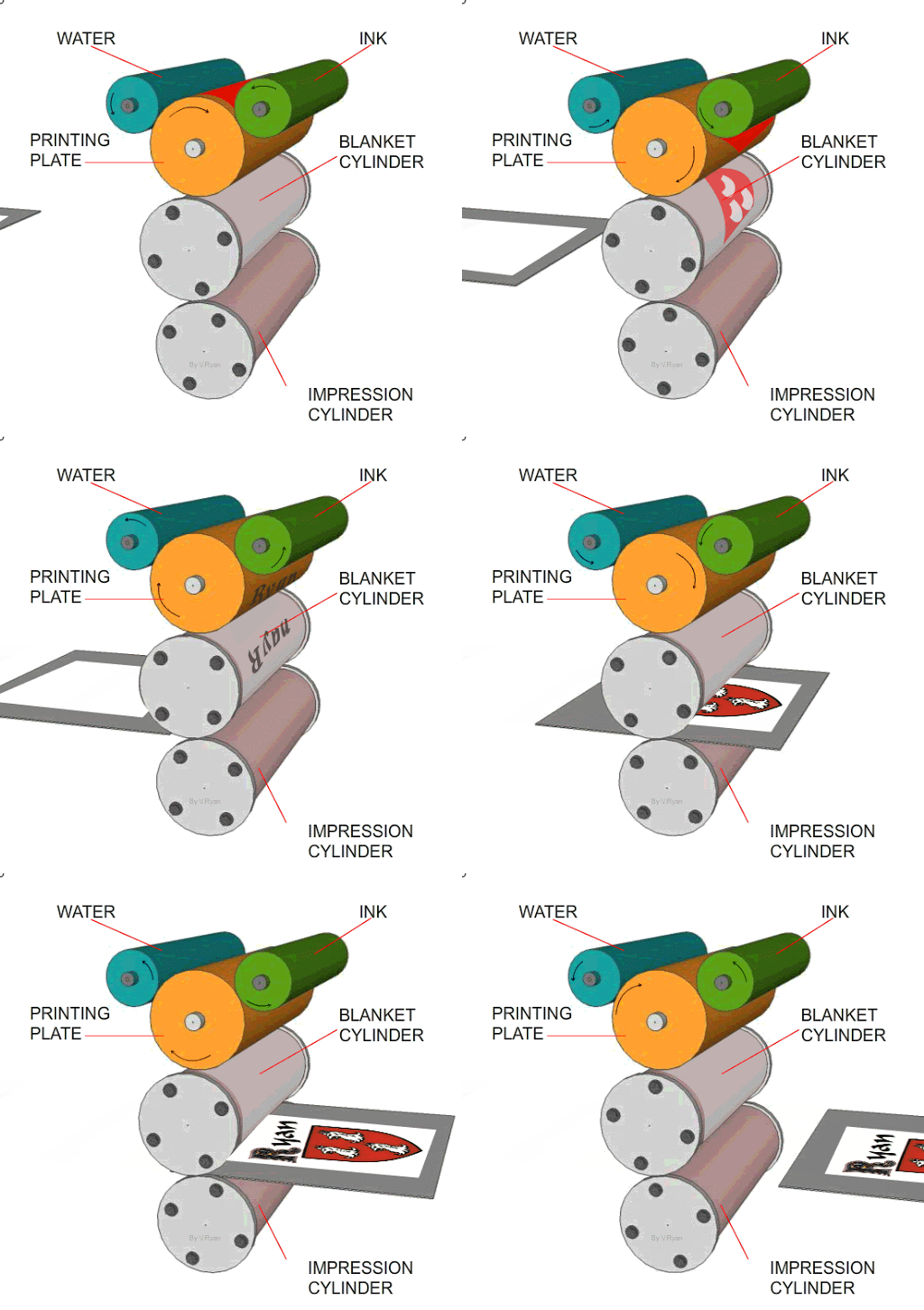
Also known as offset printing or litho, offset lithography is a very popular method of mass-production printing. It involves printing plates, usually made from aluminium, which each hold an image of what needs to be printed. The image is put on the printing plates using a photomechanical or photochemical process during a stage of production known as prepress. One plate is made for each colour ink to be printed.

The plates are attached to cylinders on the printing press. Working on the principle that water and ink don’t mix the plate is rotated over damping rollers (water) and ink rollers (ink). The non image areas on the plate attracted the water and image areas of the plate attract ink. That inked image is subsequently transferred first from the plate to a rubber blanket and then to the printing surface, hence the term offset.

A print job that prints only in black ink requires only one plate. A print job that prints in red and black ink requires two plates. The more plates that are needed to print a job, the higher the price.

When coloured printing is required the coloured images are split in Cyan, Magenta, Yellow, and Black (CMYK). A set of four plates is need running on four separate cylinders in the printing press.

In some cases, there may be more than four plates. If a logo must appear in a certain Pantone colour, for example, or if a metallic ink is used in addition to full-colour images.

Offset printing has a high set up cost, prepress time, plates and making ready the press. But once the press is running it has a very low unit cost, making it the most cost effective solution for quanities of 500 or more.

Digital Print

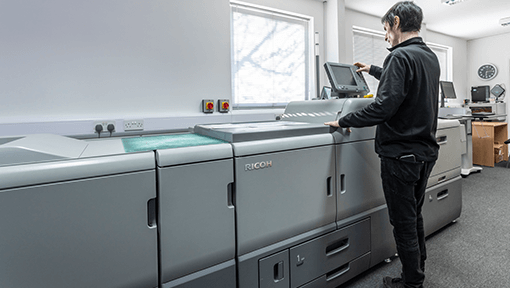
Digital printing is a method that covers a variety of different techniques including inkjet printing and laser. In digital printing, images are sent directly to the printer using digital files. A RIP (Raster Image Processor) converts the digital image into a language the digital printer can understand. This eliminates the need for a printing plate and can save time and money (unless you’re printing in larger quantities).

Most production digital printers use laser technology, similar to a photocopier. The image that needs to be printed is formed by selectively applying a charge to a metal cylinder called a drum. The electrical charge is used to attract toner particles. These particles are transferred to the media that is being printed on. To make sure the toner is fixed properly, the substrate passes through a fuser that melts the toner into the medium.

Digital printing allows for quick turnaround and allows businesses to print on demand. It’s also great for small run jobs, requests can be made for as little as one print. If you choose digital printing for the right job, it can make for a very cost-effective soloution that still produces high quality prints.

Large Format Printing

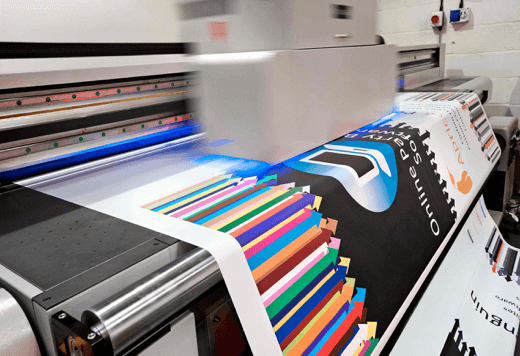
As the name might suggest, large format printing exists to produce maximum print roll width. Perfect for traditional advertising mediums and businesses who are looking to make a huge impact on their customers, this printing method gives you with a much bigger area to work on, as opposed to the other methods such as digital printing.
Rather than printing onto individual sheets, large format printing uses rolls of prints that are fed incrementally to produce one large sheet. Large format printing is the best option for large print media such as building wraps, billboards, banners, and murals.

Most large format printer uses inkjet technology, small droplets of ink that are propelled from the nozzles of one or more print heads. Inkjet devices can print on a wide range of substrates such as paper, plastic, canvas or even doors and floor tiles.

There are numerous other technologies and new ones being introduced all the time for printing on a multitude of substrates.

https://en.wikipedia.org/wiki/Printing